

Acupuncture Provides Parkinson’s Disease Relief
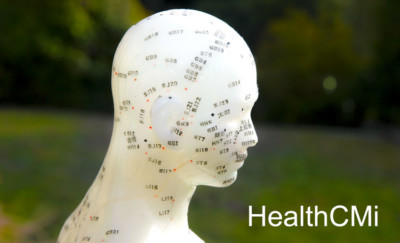 Acupuncture is an effective treatment modality for the alleviation of Parkinson’s disease. Zhejiang University of Traditional Chinese Medicine (Hangzhou, China) researchers conducted a study comparing the effects of drug therapy as a standalone procedure with acupuncture plus drug therapy in an integrated treatment protocol. Based on the data, the researchers conclude that acupuncture plus antiparkinsonian drug therapy is significantly more effective than using only antiparkinsonian drug therapy. [1]
Two groups were compared. In one group, Parkinson’s disease patients received only levodopa-benserazide as a means to alleviate symptoms. In the second group, levodopa-benserazide was combined with acupuncture therapy. The acupuncture plus drug therapy group had a total effective rate of 89.4% after four courses of treatment, whereas the drug therapy only group had a 52.6% total effective rate for the management of Parkinson’s disease.
The results indicate that acupuncture is an important treatment option for patients receiving benderizine-levodopa for the purposes of Parkinson’s disease treatment. Levodopa-benserazide is a medication containing two ingredients: levodopa and benserazide. Levodopa is a precursor to dopamine, the latter of which is needed in the brain of Parkinson’s disease patients. Benserazide prevents the conversion of levodopa to dopamine prior to reaching the brain and reduces some of levodopa’s adverse effects. This combination is used to reduce symptoms for patients suffering from Parkinson’s disease.
Evaluations
Multiple subjective and objective instruments were used to measure patient outcomes before and after treatment. First, the Unified Parkinson’s Disease Rating Scale (UPDRS), which is the most widely used clinical rating scale for Parkinson’s disease, was used to record symptomatic improvement at several data points: before treatment, after two treatment courses, after four treatment courses. Second, the superoxide dismutase (SOD) activity and lipid peroxidation levels in plasma and red blood cells were recorded. Independent studies have proven that oxidative stress plays an important role in the degeneration of dopaminergic neurons in Parkinson’s disease (PD) patients, which is characterized by decreased SOD activity and increased lipid peroxidation. [2]
After four treatment courses, the scores in the acupuncture plus drug group were significantly improved (i.e., lower) than scores before treatment and for those in the drug control group (P<0.05). After four treatment courses, the SOD activity was significantly higher (i.e., improved) in the acupuncture plus drug group and were also better than scores in the drug control group (P<0.05). The lipid peroxidation levels in the acupuncture plus drug group were significantly lower (i.e., improved) than scores before treatment and were also better than scores in the drug control group.
Background Introduction
Parkinson’s disease (PD) is the second most common progressive neurodegenerative disorder. [3] PD is characterized by both motor and non-motor symptoms, such as bradykinesia, resting tremors, and muscle rigidity (which occur due to dopamine deficiency). [4] Diagnostically, Parkinson’s disease is distinguished from essential tremors in that essential tremors are more prevalent with activity and Parkinson’s disease tremors worsen at rest. Levodopa (LD) remains the gold standard pharmacological treatment for PD. However, LD’s effectiveness may decrease overtime. In addition, it has side effects including motor response oscillations and dyskinesia. [5]
New treatment strategies that overcome these limitations are required. Acupuncture has been widely used as a complementary and alternative medicine to relieve the symptoms of PD in Asia, Europe, and in the United States. Previous studies have proven that acupuncture is effective for relieving the symptoms for patients with PD. With the help of acupuncture, both motor symptoms (gait disorder and balance) and non-motor symptoms (psychiatric disorders, sleep problems, gastrointestinal symptoms) can be relieved. In this study, the researchers note that “the use of acupuncture in an integrated treatment protocol can reduce the dosage of LD to eliminate its side effects.” [6]
Design
The Zhejiang University of Traditional Chinese Medicine researchers (Yang et al.) used the following study design. A total of 38 patients diagnosed with Parkinson’s disease were treated and evaluated in this study. They were randomly divided into an acupuncture plus drug treatment group and a drug control group, with 18 patients in each group. There were no significant statistical differences in age, gender, severity of disease, and course of disease relevant to patient outcome measures for patients initially admitted to the study (P>0.05).
Treatment Procedure
The control group received 62.5 – 500 mg of levodopa-benserazide (2 – 4 times per day). Dosage was dependent upon the severity of Parkinson’s disease. Patients in the control group were not treated with acupuncture. The treatment group received both scalp and body style acupuncture in addition to the identical drug treatment protocol administered to the control group. The acupoints used for scalp acupuncture included the following:
- MS1 (middle line of forehead)
- MS5 (middle line of vertex)
- MS6 (anterior oblique line of vertex-temporal)
The acupoints used for body style acupuncture included the following:
- LI4 (Gegu)
- SI3 (Houxi)
- LI5 (Yangxi)
- SI6 (Yanglao)
- LI11 (Quchi)
- PC3 (Quze)
- LU5 (Chize)
- LV3 (Taichong)
- ST41 (Jiexi)
- KI3 (Taixi)
- GB34 (Yanglingquan)
- SP9 (Yinlingquan)
- BL40 (Weizhong)
- GB30 (Huantiao)
For scalp acupuncture, treatment commenced with patients in a supine position. A 0.25 mm × 40 mm disposable acupuncture needle was inserted transverse-obliquely into each acupoint, to a standard depth. Each needle was manipulated with the twirling method for three minutes. Once manual acupuncture achieved the arrival of deqi, electroacupuncture stimulation was added to the acupoints using a dense wave. The intensity level was set to patient tolerance levels. A 30 minute needle retention time was observed.
For body style acupuncture, needles were rapidly inserted perpendicularly and were manipulated with mild reinforcing and reducing (Ping Bu Ping Xie) manipulation methods. After achieving a deqi sensation, the needles were retained for 30 minutes. An acupuncture treatment was applied every two days. Each treatment course consisted of 10 acupuncture sessions, followed by a 7 day break before the next course of treatments. All patients received four treatment courses in total.
Results
The results indicate that acupuncture combined with levodopa-benserazide into an integrated treatment protocol is more effective than levodopa-benserazide as a standalone therapy. Based on the data, Yang et al. conclude that acupuncture is safe and effective for the treatment of Parkinson’s disease.
University of Arizona
The Zhejiang University of Traditional Chinese Medicine clinical trial confirms additional research. University of Arizona surgery and neurology department doctors find acupuncture effective for the treatment of balance and gait disorders in Parkinson’s disease patients. Acupuncture produced significant clinical improvements in balance, gait speed, and stride length for Parkinson’s disease patients. The results of the sham controlled trial were published in Neurology, the journal of the American Academy of Neurology.
Each acupuncture session was 30 minutes in length. Patients received one acupuncture treatment per week for a total of three weeks. Patients receiving true acupuncture had a 31% improvement in balance, 10% improvement in gait speed, and 5% increase in stride length. Patients in the sham acupuncture control group did not demonstrate any improvements. The University of Arizona research team notes, “EA [electroacupuncture] is an effective therapy in improving certain aspects of balance and gait disorders in PD [Parkinson’s disease].” [7]
Notes
[1] Yang DH, Shi Y, Jia YM. Influence of acupuncture plus drug in the amelioration of symptoms and blood antioxidant system of patients with Parkinson’s disease. Chinese Journal of Clinical Rehabilitation, 2006 (19) :14 -16
[2] Dias V1, Junn E, Mouradian MM. The role of oxidative stress in Parkinson’s disease [J]. J Parkinsons Dis. 2013;3(4):461-91.
[3] I.H. Sturkenboom, M.J. Graff, G.F. Borm, et al., Effectiveness of occupational therapy in Parkinson’s disease: study protocol for a randomized controlled trial, Trials 14 (2013) 34.
[4] W. Poewe, K. Seppi, C.M. Tanner, et al., Parkinson disease, Nat. Rev. Dis. Prim. 3 (2017) 17013.
[5] Dias V1, Junn E, Mouradian MM. The role of oxidative stress in Parkinson’s disease [J]. J Parkinsons Dis. 2013;3(4):461-91.
[6] Yang DH, Shi Y, Jia YM. Influence of acupuncture plus drug in the amelioration of symptoms and blood antioxidant system of patients with Parkinson’s disease. Chinese Journal of Clinical Rehabilitation, 2006 (19) :14 -16.
[7] Lei, Hong, Nima Toosizadeh, Michael Schwenk, Scott Sherman, Stephen Karp, Saman Parvaneh, Esther Esternberg, and Bijan Najafi. “Objective Assessment of Electro-acupuncture Benefit for Improving Balance and Gait in Patients with Parkinson’s Disease (P3. 074).” Neurology 82, no. 10 Supplement (2014): P3-074.
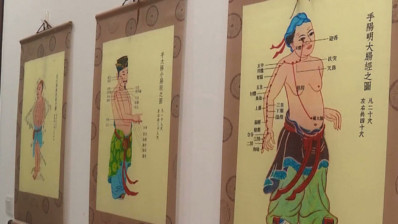 Traditional Chinese medical treatments have been around for millennia – and embraced the world over.Scientists, however, are skeptics by profession and look for that ultimate seal of approval: “proof.”As CGTN’s Frances Kuo reports, researchers are stepping up to the challenge and finding some success linking traditional methods to modern science.Acupuncture originated in China thousands of years ago and is popular today all over the world.Practitioners insert thin needles through the skin of a patient, stimulating what they call “acupoints” – to improve a whole host of conditions.But despite generations of anecdotal accounts of its effectiveness, there’s never been absolute scientific proof that it works.Recently though, Chinese scientists have made breakthroughs in understanding.Key to acupuncture’s effectiveness is the location of the acupoints, found where there are concentrations of human mast cells tied to our immune system.“The Mast Cell has a kind of sensitive protein that can feel the stimulation,” said Huang Meng, Research Assistant at Fudan University. “When it’s activated, the cell releases a kind of bio-active matter, which will, in turn, stimulate the blood capillaries and nerves around it. This will produce a signal for the curative effect.”
 While aging as a whole is inevitable, some aspects of aging may actually be caused by a simple vitamin deficiency. That’s right – wrinkles, stiff muscles and decreased athletic performance can all be symptoms of just one micronutrient deficiency: vitamin K2.
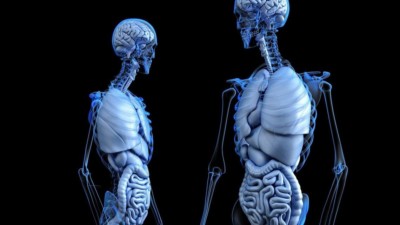 In Chinese Medicine the Intestines of the human are called “ Our second brain” for the last 4 thousand years. Now, the same term is used by western scientists. You’ve got brain cells in your butt. They make your colon smart.A team of scientists in Australia has just released a study with new
  Dear Friends,

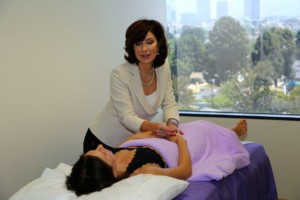
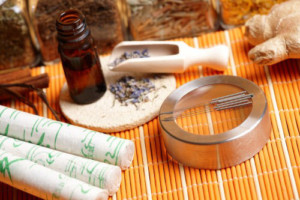 Acupuncture is one of the oldest, most commonly used systems of healing in the world. Originating in China some 3,500 years ago, only in the last three decades has it become popular in the United States. In 1993, the Food and Drug Administration estimated that Americans made up to 12 million visits per year to acupuncture practitioners and spent upwards of half a billion dollars on acupuncture treatments.
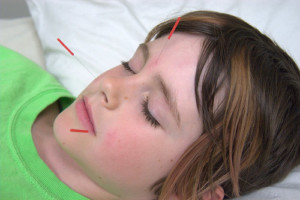 Most people believe that acupuncture cannot be used on children. The reason behind it, as in many cases for adults as well, are that most people are afraid of needles or potential pain. The majority of my patients are pleasantly surprised when during their first visit, their treatment is virtually painless. In cases with children younger than 3-years-old, I use 24-karat gold plated beads instead of needles. It tell them that ‘we are playing stickers.’ The beads are attached to a surgical adhesive tape, so I am able to place a bead first on Mom’s hand, then on mine, and then the child usually asks me to place one on him or her as well. Little do they know that I am placing the beads in a special spot called acupressure points. Frequently all three of us will cover the spots with small cartoonish stickers also. For the children over 3-years-old, I use needles with a gauge as thin as a human hair.
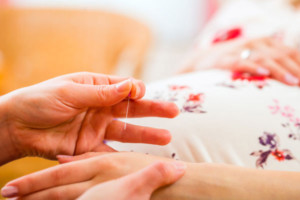 I came across an interesting article this week that I wanted to share on the growing scientific evidence that shows acupuncture can boost pregnancy rates when combined with other fertility treatments. It discusses a couple in Connecticut who were trying to conceive and finally decided to try acupuncture as a complement to their IVF treatments. You can read more about it by